&geometry(156x161) "Over the Top Heating & Cooling")
Why Condensate Neutralizers Matter in Rural Drainage Systems
 "Why Condensate Neutralizers Matter in Rural Drainage Systems")
Condensate Neutralizers: Why They Matter (Especially for Rural Drainage Systems)
High-efficiency furnaces are awesome for comfort and lower gas bills — but they also create something most homeowners never think about: acidic condensate water.
That condensate has to go somewhere. And depending on your home’s drainage setup, it can quietly cause damage over time.
In this guide, we’ll break down what a condensate neutralizer is, why it matters, and why it’s a must-have upgrade for rural homes with septic tanks, holding tanks, or concrete drainage systems.
What Is Furnace Condensate?
A high-efficiency furnace (and many boilers) pulls more heat out of the exhaust than older systems. As it squeezes extra heat out, water vapour in the exhaust condenses into liquid water.
That liquid is called condensate.
Your furnace drains it away through a small tube into:
a floor drain
a condensate pump (then to a drain)
a sump / drainage tank
a septic or holding tank (common in rural homes)
Why Is Condensate Acidic?
When a furnace burns natural gas, the exhaust contains compounds like carbon dioxide. When that mixes with water, it can create a mildly acidic liquid.
So your furnace condensate is typically not neutral water — it can be acidic enough that, over time, it may:
break down concrete surfaces
wear out metal fittings
stress certain types of plumbing and drainage components
This is one of those issues that happens slowly — and the damage often doesn’t show up until there’s a bigger problem.
Why Condensate Is a Bigger Deal in Rural Homes
In the city, most homes drain condensate into a municipal sewer system through modern plumbing materials.
In rural properties, your drainage setup may include:
septic tanks
holding tanks
concrete sump pits
concrete drainage tanks
older pipe materials and fittings
Here’s the issue: acidic condensate + concrete = long-term wear.
Over time, acidic condensate can:
? erode concrete surfaces
? rough up tank interiors
? weaken older fittings
? lead to leaks, premature breakdown, or costly fixes
If you’re rural in Parkland County or surrounding areas, a condensate neutralizer is one of the simplest upgrades you can make to protect your drainage system.
It’s Not Just Rural: City Homes Can Benefit Too
Even on city drainage systems, condensate can still be hard on:
older drains
some metal components
certain vulnerable connection points
A neutralizer is inexpensive protection compared to the cost of drain issues later — especially if your furnace drains into a sensitive area or older plumbing.
What Is a Condensate Neutralizer?
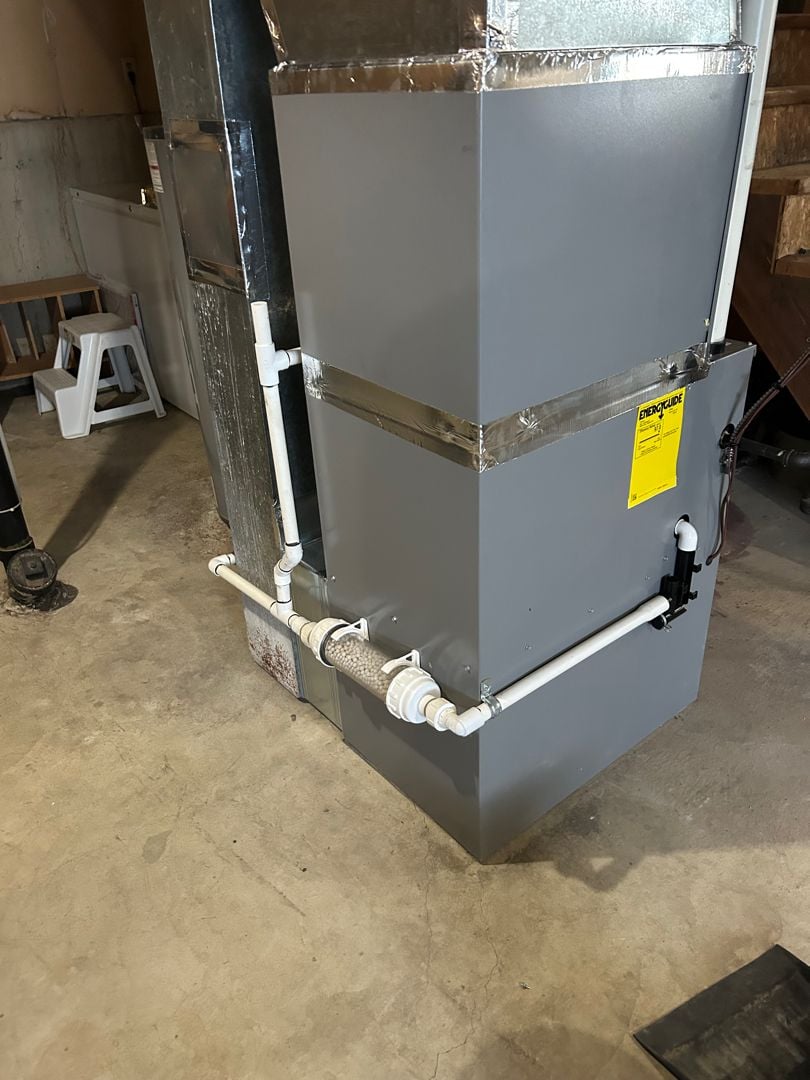
A condensate neutralizer is a small device installed inline on the condensate drain line.
Inside is neutralizing media (usually limestone-based material) that helps raise the pH of the condensate before it enters your drainage system.
Think of it like a “filter” that protects your drains:
acid in → safer water out ?
What Happens If You Don’t Use One?
Some homes can run for years without obvious issues… until they can’t.
Common long-term risks include:
Concrete pits/tanks slowly degrading
Rusting or damaged fittings
Drainage components failing early
Hidden damage that’s only noticed when repairs are expensive
The problem is you often don’t see it happening.
It’s a slow process, and the furnace keeps running normally the whole time.
Who Should Install a Condensate Neutralizer?
A neutralizer is a smart idea for:
? Rural Homes (Strongly Recommended)
Septic systems
Holding tanks
Concrete drainage tanks
Concrete sump pits
? Homes With High Run Time
If your furnace runs a lot (cold snaps, older home, lots of heating demand), you produce more condensate, faster.
? New Furnace Installs
This is the ideal time to install one, because:
the drain line is being built or modified anyway
you avoid rework later
it’s cheaper during installation than after
? Boilers & Tankless Systems (Often)
Many high-efficiency boilers and some tankless heaters also produce condensate and benefit from neutralizing.
How a Proper Installation Should Look
A professional install typically includes:
mounting the neutralizer correctly (secure and serviceable)
ensuring correct slope (gravity drain) or proper pump connection
clean, leak-free fittings
placing it where it can be opened and serviced
confirming drainage flow is reliable
This matters because a poor install can create:
slow drains
freeze risk (if routed poorly)
clogs
back-ups
Do Condensate Neutralizers Need Maintenance?
Yes — and this is important.
Neutralizers have media inside that gradually gets used up.
If it’s not maintained, it can stop working effectively.
A typical maintenance routine is:
check it during furnace servicing
replace media when needed (depends on run time and drainage volume)
If you’re rural, it’s especially worth checking yearly.
Signs Your Condensate Drainage Might Need Attention
Even if you don’t know if you have a neutralizer, watch for:
slow draining condensate line
condensate pump cycling too often
water around the furnace base
repeated drain clogs/freezing (winter)
unusual corrosion or breakdown near the drain area
If you’re unsure, a quick inspection can confirm what’s installed and how it’s draining.
Are Condensate Neutralizers Required?
Rules and best practices can depend on:
equipment type
local codes
site drainage conditions
Even when they aren’t “mandatory,” they’re often considered best practice, especially for rural drainage systems and concrete tanks.
If you’re installing a new high-efficiency furnace in Stony Plain, Spruce Grove, or Parkland County, it’s worth asking your installer about it.
What Does It Cost to Install a Condensate Neutralizer?
Costs vary depending on:
access
drain routing
whether a condensate pump is involved
the current drain setup condition
But in most installs, a neutralizer is a small add-on compared to the furnace and can save major repair costs down the road.
The big win is peace of mind — especially for rural drainage systems.
Condensate Neutralizers in Parkland County & Area
At Over the Top Heating, we install condensate neutralizers on high-efficiency furnaces and heating equipment, especially for rural homes where drainage systems and concrete tanks need extra protection.
If you’re not sure where your furnace drains or whether a neutralizer is installed:
? We can check your system
? Confirm your drain routing
? Install a proper neutralizer setup
? Make sure everything drains safely and reliably
? Serving Stony Plain, Spruce Grove, Parkland County & surrounding rural areas
? Call/Text 780-870-4328
FAQ: Condensate Neutralizers
Do older furnaces need a neutralizer?
Most older mid-efficiency furnaces don’t produce condensate the same way. High-efficiency furnaces do.
Will a neutralizer stop all drainage problems?
It helps protect against acidic damage, but drainage performance still depends on proper piping, slope, and maintenance.
How often should it be serviced?
Usually checked yearly during furnace maintenance. Media replacement depends on runtime and condensate volume.
Is this only a rural issue?
No — it’s most important rurally, but city homes can benefit too depending on drainage materials and setup.
| Tags:HVAC MaitenanceHVAC PRO'SFurnacefurnace. |